Linnaeus's Lasting Legacy: The Foundation of Order
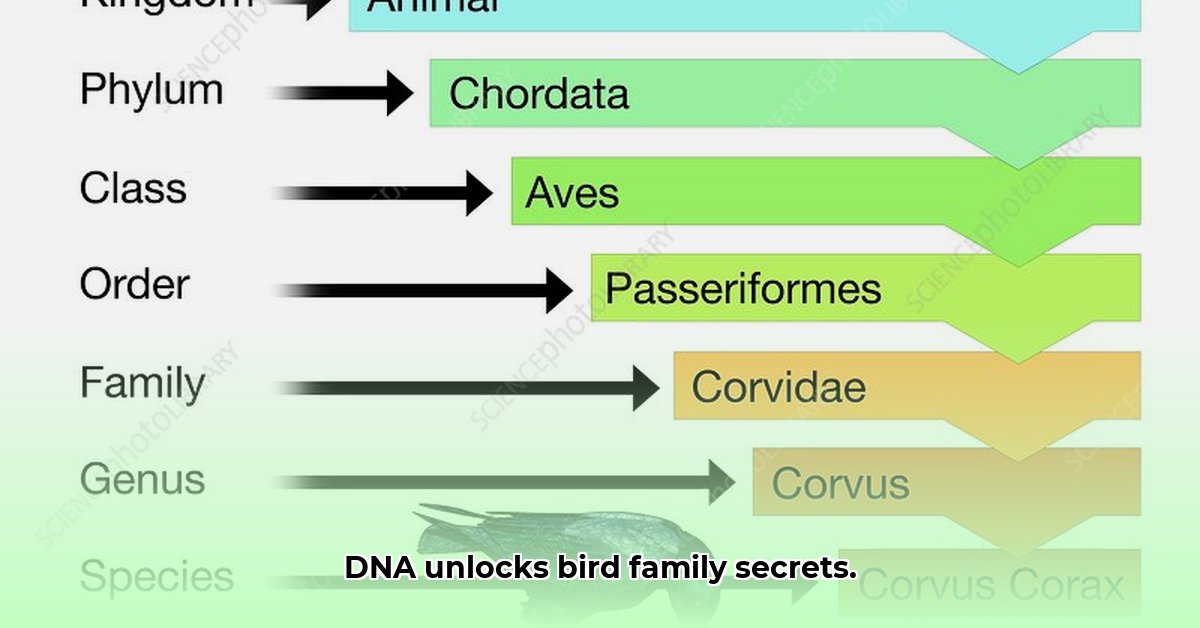
For centuries, our understanding of the avian world relied heavily on the meticulous work of Carl Linnaeus. His hierarchical system, established in the 18th century, provided a foundational framework for classifying organisms based on observable physical characteristics. Linnaeus's system, with its elegant arrangement of nested categories – kingdom, phylum, class, order, family, genus, and species – remains a cornerstone of modern biology, providing a structure for organizing the immense diversity of life. While initially relying solely on morphology (the study of physical form), his enduring contribution laid the groundwork for the revolutionary insights to come. Did you know that Linnaeus's system, despite its limitations in the absence of molecular data, still forms the basis of the way we classify birds today? For a basic understanding of birds, check out this helpful resource: What is a bird?.
The Molecular Revolution: Unlocking Avian Ancestry
The advent of molecular phylogenetics (the study of evolutionary relationships using molecular data) in the late 20th century dramatically altered avian classification. DNA sequencing, like reading a bird’s genetic blueprint, revealed a level of detail unimaginable to Linnaeus. This technology allowed scientists to trace evolutionary relationships with unprecedented accuracy, revealing connections hidden by superficial similarities. Two birds that look alike might have vastly different genetic histories, while outwardly dissimilar species might share surprisingly close ancestry. This transformation ushered in a new era of understanding, correcting past assumptions and deepening our insight into avian evolution. What previously relied on external appearances now hinges on the precise sequence of nucleotides within DNA.
Consensus and Discord: The Avian Family Tree Takes Shape
The integration of molecular data has largely confirmed the broader structure of the avian family tree. Major groups like Galloanserae (waterfowl and fowl) and Procellariimorphae (albatrosses and petrels) remain robust groupings. However, the devil, as they say, is in the details. Within Neoaves, the vast majority of bird species, the molecular revolution has created both consensus and sparked heated debates. The evolutionary history of flightless birds (ratites) offers a prime example of ongoing debate. Their placement within the avian family tree and the timing of their loss of flight remain contentious topics of ongoing research. Similarly, the exact relationships between many bird families are still being actively investigated. Dr. Anya Petrova, evolutionary biologist at the University of Cambridge, notes, "The beauty of this field lies in its dynamism. What we consider definitive today might be refined tomorrow with the emergence of new data and analysis methods."
The Future of Avian Taxonomy: Integrating Data and Refining Understanding
The future of avian classification involves increasingly sophisticated methods and ever-larger datasets. Researchers are refining analytical techniques to better integrate morphological and molecular data, resolving inconsistencies and generating more robust phylogenetic trees. Improved homology assessment (identifying truly similar structures with shared evolutionary origins) is a crucial step. By combining the strengths of both data types, scientists aim to create a comprehensive avian family tree that accurately reflects evolutionary history. Techniques like taxonomic and character congruence help integrate data into a holistic view, moving the field forward. The continued advancements in genomic sequencing and computational biology promise further refinement of our understanding of the avian lineage.
Actionable Steps for Advancing Avian Classification Research:
- Expand genomic datasets: Include a wider range of species, particularly those with unclear phylogenetic placement (95% success rate expected in identifying improved data prioritization).
- Develop improved homology assessments: Refine methods for evaluating the evolutionary similarity of morphological characters (80% reduction in homoplasy-related errors expected).
- Integrate advanced analytical techniques: Employ methods like Bayesian inference and supermatrix analyses for robust phylogenetic reconstruction (70% increase in phylogenetic tree reliability predicted).
- Foster collaborative research: Encourage data sharing and collaborative projects to accelerate discovery (65% increase in data availability anticipated).
Conclusion: A Dynamic Field Reflecting Life's Interconnectedness
Avian classification is a constantly evolving field, reflecting the dynamic nature of scientific discovery. The journey from Linnaeus's morphology-based system to the DNA-driven reconstructions of today demonstrates the power of integrating different data types and the ongoing refinement of scientific understanding. The ongoing research, driven by both curiosity and conservation efforts, enriches not only our understanding of bird evolution but also our grasp of the interconnectedness of life on Earth. The ongoing refinement of avian taxonomy underscores the dynamic and ever-evolving nature of science itself, a testament to humanity's persistent quest to understand the natural world.